Our Lord’s Idea of Repentance

Our Lord’s idea of repentance is as profound and comprehensive as His conception of righteousness. Of the three words that are used in the Greek Gospels to describe the process, one emphasizes the emotional element of regret, sorrow over the past evil course of life, metamelomai; a second expresses reversal of the entire mental attitude, metanoeo; the third denotes a change in the direction of life, one goal being substituted for another, epistrephomai; Repentance is not limited to any single faculty of the mind: it engages the entire man, intellect, will and affections… Again, in the new life which follows repentance the absolute supremacy of God is the controlling principle.

~ Geerhardus Vos 

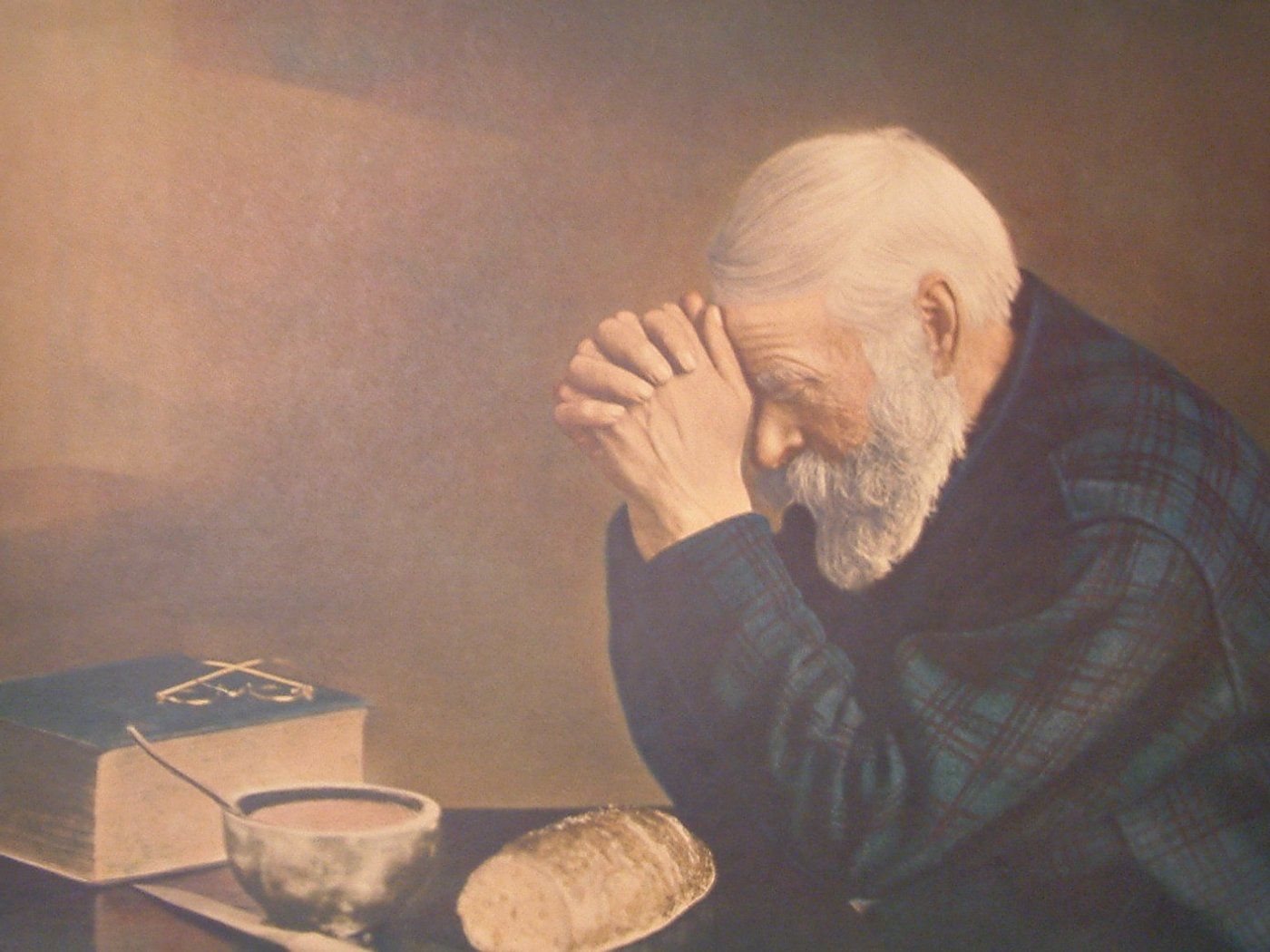
Fervent Prayer Avails Much

“The effective, fervent prayer of a righteous man avails much.”

~ James 5:16b

It has been said that “prayer moves the arm that moves the world”. And if there is anything that can prevail with God, it is the prayers of His people. Their humble, fervent, earnest petitioning. We have no power to control the Lord; nor can the creature dictate to the Creator. But we may ask Him for what we desire, and He has graciously said that such asking may effect much for our own good and the good of others. Prayer has no inherent intrinsic power. It is no magical incantation. It is an appeal, a petition, to an Almighty God who is pleased to lovingly work His will in and by the effective fervent prayers of a people who place their sincere faith in Him.

Expository Preaching:

1. Emulates biblical preaching both in content and style.

2. Best achieves the biblical intent of preaching: delivering God’s message.

3. Promotes scripturally authoritative preaching.

4. Magnifies God’s Word.

5. Provides a storehouse of preaching material.

6. Develops the pastor as a man of God’s Word.

7. Ensures the highest level of biblical knowledge for the flock

8. Leads to thinking and living biblically.

9. Encourages both depth and comprehensiveness.

10. Forces treatment of hard-to-interpret texts.

11. Allows for handling broad theological themes.

12. Keeps preachers away from ruts and hobbyhorses.

13. Prevents the insertion of human ideas.

14. Guards against misinterpretation of the biblical text.

15. Imitates the preaching of Christ and the apostles.

16. Brings out the best in the expositor.

~ James Alexander

Heart, Mind & Soul

“[They] honor Me with their lips, but their hearts are far from Me” ~ Matt. 15:8a

The Christian faith is first and foremost a matter of the heart. If one thinks living for Christ is simply, or primarily, going through a set of religious rites and rituals, they have missed the point entirely. Sadly, we can convince ourselves otherwise. Many do practically, though maybe unintentionally, honor Jesus with their lips while their hearts are far from Him.

The Lord made this clear even under the Old Covenant with Israel. He desires our heart. Though true believers in the Lord Jesus should honor Him with their lips, it should be from a heart that is drawn near to Him. It isn’t either or, it’s both. May we not depend on our outward conformity as the basis for our experience with God, rather may we be inwardly convicted and surrender our whole hearts unto Him honoring the Lord heart, mind and soul.

The Simplicity of Christ

What does the LORD require of you but to do justly, To love mercy, And to walk humbly with your God? ~ Micah 6:8b

Maybe the greatest beauty of the Christian Faith is it’s meek simplicity. It is true that you can multiply ad nauseam the theology, doctrines, practices and controversies of the church making the most simple things complicated. Over the centuries, well-meaning men have excelled in the art of making straightforward things complex. But ultimately, the question that should most intrigue the heart of the true believer is: What does God require of me?

The passage before us offers a wonderful summary of both God’s demands and desires for His people. And it is presented here in plainness and eloquence in three equally significant parts; do justly, love mercy and walk humbly. Imagine what the Christian life would look like if we but just consistently and faithfully followed these? How different would your life be?

The purpose of this short devotion is to remind the reader to keep their eye on those aspects of their faith and life that most matter to the Lord. These three requirements here in Micah essentially sum up the law to love God and love your neighbor. While engaging in the more weightier matters of our faith has its place and is important, we must begin and retain the simplicity of Christ as well, to do justly, love mercifully, and walk humbly with the Lord.

His Path Alone

“You will show me the path of life” – Psalm 16:11a

In Robert Frost’s famous poem The Road Not Taken, he describes one path that eventually diverges into two deep in the woods. This individual spends the greater portion of the poem contemplating which road to take. Yet, unable to take them both, and having to decide, the traveler chooses the one that looks less worn, less used. And his conclusion upon taking “the one less traveled by” is that it made all the difference in his life.

When it comes to our spiritual path, our soul’s life journey, only the path God shows us is the path of life. Though other paths might entice us with the lure of worldly treasures and temptations, ultimately they lead to death. Jesus would put it this way, “I am the way, the truth, and the life. No one comes to the Father except through Me.” If He has not done so already, pray God would show you the path of life. For in His path alone, lays all true difference.

His Offending Creatures

“The complete atonement which Jesus Christ has made for our sins, by the sacrifice of Himself, is the life and center of the evangelical system, and that which endears it so much to the hearts of those who believe. Here we see pardon procured, and the sinner saved, while sin is condemned and punished.

Here we see the most solemn display of justice and holiness, in conjunction with the freest exercise of mercy. Here we see sinful rebels delivered from deserved punishment, and advanced to a state of dignity and honor; and at the same time, the rights of that divine government against which they had rebelled inviolably preserved and maintained.

Through what Jesus Christ has done and suffered for us – we behold the righteous law of God magnified, in justifying those who had violated its precepts, and brought themselves under its curse. In the death of that Lamb of God, we perceive at once – the Almighty’s eternal abhorrence of that which is evil and His infinite love to His offending creatures.

~ John Fawcett

There Is Something Wrong

“Here is the great evangelical disaster – the failure of the evangelical world to stand for truth as truth. There is only one word for this – accommodation: the evangelical church has accommodated to the world spirit of the age… Truth carries with it confrontation. Truth demands confrontation: loving confrontation, but confrontation nevertheless. If our reflex action is always accommodation regardless of the centrality of the truth involved, there is something wrong.”

~ Francis Schaeffer

Warning Against Growing Cold In Preaching

“When I let my heart grow cold, my preaching is cold; and when it is confused, my preaching is confused; and I can often observe the effect of this in the best of my hearers: that when I have grown cold in preaching, they have grown cold too; and the next prayers which I have heard from them have been too much like my preaching.”

~ Richard Baxter, The Reformed Pastor

Refreshing The Congregation

“We are the nurses of Christ’s little ones. If we keep from taking food ourselves, we will famish them; it will soon be visible in their leanness, and in the dull discharge of their several duties. If we let our love decline, we are not likely to raise theirs. If we abate our holy care and fear, it will appear in our preaching: if the matter does not show it, the manner will. If we feed on unwholesome food, whether errors or fruitless controversies, our hearers are likely to fare the worse for it. Whereas, if we would abound in faith, and love, and zeal, it would overflow to the refreshment of our congregations, and it would appear in the increase of those same graces in them!”

~ Richard Baxter, The Reformed Pastor