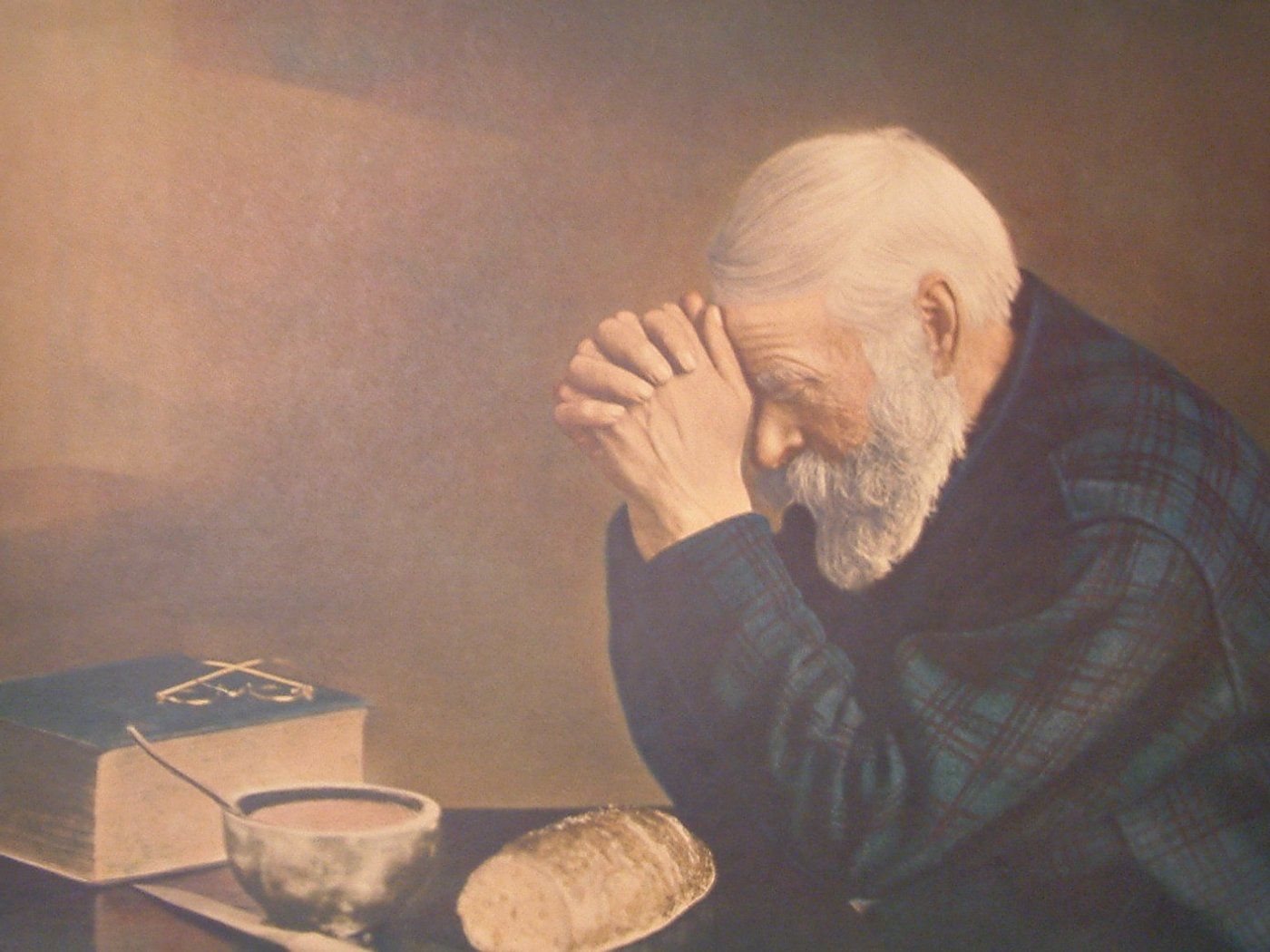
The Simplicity of Christ

What does the LORD require of you but to do justly, To love mercy, And to walk humbly with your God? ~ Micah 6:8b

Maybe the greatest beauty of the Christian Faith is it’s meek simplicity. It is true that you can multiply ad nauseam the theology, doctrines, practices and controversies of the church making the most simple things complicated. Over the centuries, well-meaning men have excelled in the art of making straightforward things complex. But ultimately, the question that should most intrigue the heart of the true believer is: What does God require of me?

The passage before us offers a wonderful summary of both God’s demands and desires for His people. And it is presented here in plainness and eloquence in three equally significant parts; do justly, love mercy and walk humbly. Imagine what the Christian life would look like if we but just consistently and faithfully followed these? How different would your life be?

The purpose of this short devotion is to remind the reader to keep their eye on those aspects of their faith and life that most matter to the Lord. These three requirements here in Micah essentially sum up the law to love God and love your neighbor. While engaging in the more weightier matters of our faith has its place and is important, we must begin and retain the simplicity of Christ as well, to do justly, love mercifully, and walk humbly with the Lord.

A Second Adam

“For as in Adam all die, even so in Christ all shall be made alive.”

~ 1 Corinthians 15:22

“The Christ of God was not then first crucified when the Jews brought Him to the Cross; but Adam and Eve were His first real murderers; for the death which happened to them in the day when they did eat of the earthly tree was the death of the Christ of God or the divine life in their souls. For Christ had never come into the world as a second Adam to redeem it, had He not been originally the life and perfection and glory of the first Adam.”

~ William Law

A Hereafter

“For surely there is a hereafter, and your hope will not be cut off.”

~ Proverbs 23:18

As sure as the Bible teaches there is a God, a Savior and a need for salvation, the Scriptures teach there is a hereafter. This present world is not all there is. There is another place, another time, which spans all eternity. Each person has an appointment with the hereafter. The Bible describes the hereafter as one of two places: heaven or hell, paradise or perdition, eternal joy or everlasting justice. Where will you be? For those trusting in Jesus Christ, your hope will not be cut off.

~ apl

Teach My Heart

“Teach me Your way, O Lord; I will walk in Your truth; Unite my heart to fear Your name. I will praise You, O Lord my God, with all my heart, And I will glorify Your name forevermore.”

~ Psalm 86:11-12

There are many spiritual benefits to growing in grace. Here the Psalmist petitions Jehovah in this prayer to teach him in the way of the Lord. The Psalm’s author desires to learn, to grow, and be fed from the bounty of his Master’s table in the ways of God. The benefits and blessings of learning the Lord’s ways are manifold in these verses.

In this passage, the word “teach” in the original literally means “to point or shoot” in a particular direction. The Psalmist aspires to be nudged or even pushed in the direction of the ways of the Lord that he might walk, or live, in God’s truth. He is seeking the blessings of the narrow path of God’s righteous ways that his words and deeds might align with that of his Lord’s will.

More in particular, David longs for a uniting or joining of his heart with the Lord that he might revere God’s name; that his heart would be inclined to worship, honor and obey the Lord. Through the Lord’s teaching of David, springs forth praise for God and ultimately the glorifying of the name of David’s covenant-keeping God.

Believers should not see their Christian education as merely a way to gain head-knowledge. God’s instruction to us is always moral in nature. It is intended to “push” the believer towards holy living, in being more Christ-like. David understood his prayer for God to teach him His ways as a means to an end. The end being to glorify God’s name forevermore.

~ apl

Prayer Life Pause: Heavenly Father, may my growing in the grace and knowledge of the Lord Jesus Christ cause me to forever break out in worship and praise of His glorious name. In Jesus’ name, amen.

Just As Necessary

In what, then, are justification and sanctification alike? (a) Both proceed originally from the free grace of God. It is of His gift alone that believers are justified or sanctified at all. (b) Both are part of that great work of salvation which Christ, in the eternal covenant, has undertaken on behalf of His people. Christ is the fountain of life, from which pardon and holiness both flow. The root of each is Christ. (c) Both are to be found in the same persons. Those who are justified are always sanctified, and those who are sanctified are always justified. God has joined them together, and they cannot be put asunder. (d) Both begin at the same time. The moment a person begins to be a justified person, he also begins to be a sanctified person. He may not feel it, but it is a fact. (e) Both are alike necessary to salvation. No one ever reached heaven without a renewed heart as well as forgiveness, without the Spirit’s grace as well as the blood of Christ, without a meetness for eternal glory as well as a title. The one is just as necessary as the other.

~ J.C. Ryle (1816-1900)

A Pupil of Scripture

“Now, in order that true religion may shine upon us, we ought to hold that it must take its beginning from heavenly doctrine and that no one can get even the slightest taste of right and sound doctrine unless he be a pupil of Scripture.”

~ John Calvin (1509-1564)

The Imago Dei

After God had made all other creatures, he created man, male and female, with reasonable and immortal souls, rendering them fit unto that life to God for which they were created; being made after the image of God, in knowledge, righteousness, and true holiness; having the law of God written in their hearts, and power to fulfill it, and yet under a possibility of transgressing, being left to the liberty of their own will, which was subject to change.

~ London Baptist Confession of Faith 1689 VI.II

The Rock

“Let God be exalted, The Rock of my salvation!”

~ 2 Samuel 22:47 (NKJV)

The doctrine of God’s immutability is of the highest significance for religion. The contrast between being and becoming marks the difference between the Creator and the creature. Every creature is continually becoming. It is changeable, constantly striving, seeks rest and satisfaction, and finds this rest in God, in Him alone, for only He is pure being and no becoming. Hence, in Scripture God is often called the Rock.

~ Herman Bavinck (1854-1921)