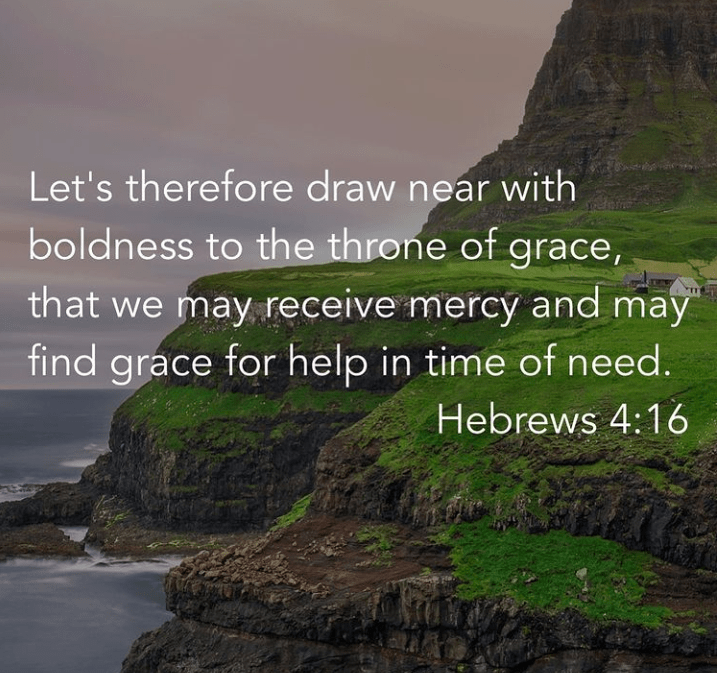
Most Necessary

All Scripture is given by inspiration of God, and is profitable for doctrine, for reproof, for correction, for instruction in righteousness, that the man of God may be complete, thoroughly equipped for every good work.

~ 2 Timothy 3:16-17 (NKJV)

The Holy Scripture is the only sufficient, certain, and infallible rule of all saving knowledge, faith, and obedience, although the light of nature, and the works of creation and providence do so far manifest the goodness, wisdom, and power of God, as to leave men inexcusable; yet are they not sufficient to give that knowledge of God and his will which is necessary unto salvation. Therefore it pleased the Lord at sundry times and in divers manners to reveal himself, and to declare that his will unto his church; and afterward for the better preserving and propagating of the truth, and for the more sure establishment and comfort of the church against the corruption of the flesh, and the malice of Satan, and of the world, to commit the same wholly unto writing; which maketh the Holy Scriptures to be most necessary…

~ London Baptist Confession of Faith 1689

Man’s View of This World

If you have ever given much thought to this present world in which we live, you have some idea of the power of interpretation. The world is a stable fact, quite unchanged by the passing of years, but how different is modern man’s view of the world from the view our fathers held. The world is for all of us not only what it is; it is what we believe it to be, and a tremendous load of wealth or woe rides on the soundness of our interpretation! In the earlier days, when Christianity exercised a dominant influence over American thinking, men conceded this world to be a battleground. Man, so our fathers held, had to choose sides. He could not be neutral-for him it must be life or death, heaven or hell! In our day, the interpretation has changed completely. We are not here to fight, but to frolic! We are not in a hostile foreign land; we are at home! It now becomes the bounden duty of every Christian to reexamine his spiritual philosophy in the light of the Bible. So much depends on this that we cannot afford to be careless about it!

~ A.W. Tozer (1897-1963)

Little To The Imagination

“I belong to my beloved, and his desire is for me.”

~ Song of Solomon 7:10

Solomon was famous for his wisdom and the ability to put down in words human thoughts and feelings that express our deepest and most intimate emotions. In his “songs”, Solomon captures the beauty and essence of human desire, love and devotion between a man and a woman. And it is portrayed at times, as to leave little to the imagination.

The spiritual significance of King Solomon’s words here relate to Christ and His Church. As the man in the “songs” pursues his beloved, the woman to whom he gives his love (vs.12), so Christ loves and pursues His Church. Jesus’ desire is for you to respond to His love and to pursue Him and to desire Him above all else. May our love and commitment to Christ be so evident, steadfast and sure, it leaves little to the imagination.

Amen

Glories of Heavenly Treasure

Then Balak said to Balaam, “What have you done to me? I took you to curse my enemies, and look, you have blessed them bountifully!”

~ Number 23:11 (NKJV)

Balak had promised Balaam a handsome amount of wealth if he would only use his prophetic voice to speak out against Israel and curse them. Yet, though Balaam had the temptation of abundant earthly treasure awaiting him for this simple request, he would not, he could not speak out against God and His people. His fear of the Lord and faithfulness to God compelled Balaam to respond to Balak saying, “Must I not take heed to speak what the LORD has put in my mouth?”

We are often tempted with the promise of earthly prosperity today if we will but sin against our eternal God. Satan tempted Christ in like manner. But for those who fear the Lord and desire above all to know and do His will, no worldly compensation will ever replace the glories of heavenly treasure and the blessings of obedience to God now, and the wonderful everlasting inheritance awaiting God’s Faithful.

Amen

The Spirit & The Word

We must never separate the Spirit and the Word. The Spirit speaks to us through the Word; so we should always doubt and query any supposed revelation that is not entirely consistent with the Word of God. Indeed the essence of wisdom is to reject altogether the term “revelation” as far as we are concerned, and speak only of “illumination.” The revelation has been given once and for all, and what we need and what by the grace of God we can have, and do have, is illumination by the Spirit to understand the Word.

~ Dr. Martin Lloyd-Jones (1899-1981)

Christ, The Double Cure

“God loved us… and sent His Son to be the propitiation for our sins”

~ 1 John 4:10 (NKJV)

“Behold! The Lamb of God who takes away the sin of the world!”

~ John 1:29 (NKJV)

In the beautiful drama of redemption, Christ acts as the twofold Cure for the sins of His people. Biblically, there are two essential and distinct (but not separate) aspects to the redeeming characteristic and efficacy in the salvation of sinners through the saving work of the Lord Jesus Christ. Theologically, these two aspects of salvation are known as propitiation and expiation.

In 1 John 4:10, the Bible says God’s Son, Jesus, was sent to be the propitiation of our sins. What is John telling us here? The idea behind the word propitiation means to satisfy an obligation and to turn away the wrath of a righteous God who demands that His justice be satisfied. Sin incurs the anger or wrath of God. Sin offends God’s perfect sense of right or justice. Sin needs to be propitiated that the sinner might come out from under God’s holy wrath. Jesus is our propitiation. He who knew no sin became sin for us (2 Cor. 5:21). Christ bore the wrath of the Father for His people (Is. 53:4-6). Jesus propitiated our sins; that is He met the perfect requirement of justice and turned the holy wrath of God from us and took it upon Himself on the Cross.

In John 1:29 we find the second vitally important characteristic to divine mercy – the expiation of our sins. John tells us there in verse 29 of chapter 1 Jesus is the Lamb of God who takes away the sins of the world. This is expiation – it is to remove the guilt, the burden and the stain of sin from the life of the sinner. Under the Old Covenant, the sins of Israel were symbolically placed on the scapegoat and then the scapegoat was sent outside the camp, out from the presence of God and His people. There was expiation of their sins (Lev. 16:20-22). Jesus was led away outside the walls of Jerusalem, outside the camp of Israel to a place called Golgotha (Jn. 19:17) where He took and bore the sins of His people on the Cross. Jesus removed the guilt and stain of our sin.

Augustus Toplady (1740-1778) understood the Scriptural significance of both the doctrine of propitiation and expiation. When he penned his well-known hymn Rock of Ages, he was sure to include a beautiful reference to both:

                                                                                        Rock of Ages, cleft for me; Let me hide myself in Thee;
                                                                            Let the water and the blood; From Thy wounded side which flowed,
                                                     Be of sin, the double cure, save from wrath (propitiation) and make me pure (expiation).

Finally, we find in the Psalms another wonderful place in God’s Word where both propitiation and expiation are magnificently portrayed in the glorious and gracious work of salvation. In Psalm 103, verses 8-12, we read;

The LORD is merciful and gracious, Slow to anger, and abounding in mercy. He will not always strive with us, Nor will He keep His anger forever. He has not dealt with us according to our sins, Nor punished us according to our iniquities (in Christ’s propitiation of sin). For as the heavens are high above the earth, So great is His mercy toward those who fear Him; As far as the east is from the west, So far has He removed our transgressions from us (in Christ’s expiation of sin).

Amen
Sin Murdered Christ

What an accursed thing is sin, which crucified the Lord Jesus! Do you laugh at it? Will you go and spend an evening to see a mimic performance of it? Do you roll sin under your tongue as a sweet morsel, and then come to God’s house, on the Lord’s-day morning, and think to worship Him? Worship Him! Worship Him, with sin indulged in your breast! Worship Him, with sin loved and pampered in your life! O, if I had a dear brother who had been murdered, what would you think of me if I treasured the knife which had been crimsoned with his blood? – if I made a friend of the murderer, and daily consorted with the assassin, who drove the dagger into my brother’s heart? Surely I, too, must be an accomplice in the crime! Sin murdered Christ; will you be a friend to it? Sin pierced the heart of the Incarnate God; can you love it? Oh, that there was an abyss as deep as Christ’s misery, that I might at once hurl this dagger of sin into its depths, whence it might never be brought to light again!

~ Charles H. Spurgeon (1834-1892)

Milk & Honey

“Then they told him, and said: “We went to the land where you sent us. It truly flows with milk and honey…'”

~ Number 13:27 (NKJV)

The promised land of Canaan was truly an amazing place. Yet it was filled with a mighty and powerful people. It would not come to the Israelites easily, but it would come to them surely for the Lord God had determined it for the good of His people. Anywhere God sends us will be a place filled with milk and honey. God is good and faithful. And the manifestations of His love, grace and mercy are realized in the wonderful blessings His people receive from His kind hand. Though the Christian life may not always be easy, our trials are for our good and eventually lead us to our spiritual and eternal land flowing with God’s milk and honey.

~ apl