The Plan of Salvation

“Therefore, having been justified by faith, we have peace with God through our Lord Jesus Christ”

~ Romans 5:1 (NKJV)

The plan of salvation by Christ reveals God as willing to be reconciled. He is ready to pardon, and to be at peace. If the sinner repents and believes, God can now consistently forgive him, and admit him to favor. It is therefore a plan by which the mind of God and of the sinner can become reconciled, or united in feeling and in purpose. The obstacles on the part of God to reconciliation, arising from his justice and Law, have been removed, and he is now willing to be at peace. The obstacles on the part of man, arising from his sin, his rebellion, and his conscious guilt, may be taken away, and he can now regard God as his friend.

~ Albert Barnes, Notes on the Whole Bible

Dirty Feet

Jesus, my feet are dirty. Come even as a slave to me, pour water into your bowl, come and wash my feet. In asking such a thing I know I am overbold, but I dread what was threatened when you said to me, “If I do not wash your feet I have no fellowship with you.” Wash my feet then, because I long for your companionship.

~ Prayer of Origen (185-254)

Making Way For Peace

Therefore, having been justified by faith, we have peace with God through our Lord Jesus Christ

~ Romans 5:1 (NKJV)

It is sin that breeds the quarrel between us and God, creates not only a strangeness, but an enmity the holy righteous God cannot in honour be at peace with a sinner while he continues under the guilt of sin. Justification takes away the guilt, and so makes way for peace. And such are the benignity and good-will of God to man that, immediately upon the removing of that obstacle, the peace is made…. And surely a man needs no more to make him happy than to have God his friend! But this is through our Lord Jesus Christ–through him as the great peace-maker, the Mediator between God and man, that blessed Day’s-man that has laid his hand upon us.

~ Matthew Henry’s Commentary on Romans 5:1

Faith, Love & Hope

We give thanks to the God and Father of our Lord Jesus Christ, praying always for you, since we heard of your faith in Christ Jesus and of your love for all the saints; because of the hope which is laid up for you in heaven, of which you heard before in the word of the truth of the gospel

~ Colossians 1:3-5 (NKJV)

Paul continues his greeting to the Christians at Colossae by acknowledging his thanks for God’s sovereign work of salvation and His precious gift of faith in Christ Jesus that has spread among them. The Apostle, verse 4, especially recognizes these believers for their love for all the saints. Their affection for fellow disciples of the Lord Jesus appears to have been well-known for Paul and Timothy to have heard of it from afar. Oh that more true Christians today would have their reputation for love precede them in their dealings with others!

And yet though these faithful Colossians were known for their exceeding earthly good, verse 5, Paul commends them for keeping their hope and gaze fixed upon the marvelous glory which was laid up and awaited them in heaven itself. For heaven, the place of unfettered communion with our Lord Jesus Christ, is truly the eternal prize and most precious blessing of those who trust in Him! Believers are but pilgrims and strangers here on earth. We know this is not our home, we are but passing through. And like the Colossians, we lay our everlasting hope above.

Finally, at the end of verse 5, we find the cornerstone and foundation for the faith, love and hope of the saints dwelling in Colossae, it is the “the word of truth of the gospel” which they had heard, believed and embraced. Wherever true Christianity will be found, it will be accompanied by the words of truth of the gospel of Jesus Christ. There will be sound doctrine and godly teaching which humbles man and exalts Christ! Though without the words of truth as they pertain to the Gospel, a form of religion might be found, it will most assuredly lack the essential, saving, and effectual substance that is the fruit of the glorious words of truth.

A vibrant living faith is rooted in sound doctrine and godly Scriptural teaching. The blessings of a deep faith in Christ, an abiding love for God and others and the secure hope of your place in heaven are a consequence of being washed in the words of truth. Paul praises these qualities among the believers at Colossae. The Apostle thanks God, our Father, for these beautiful spiritual favors present among these saints. May we too seek the characteristics of faith, hope and love in our lives and thank God when He is pleased to grant them to us as well.

~ apl

Jesus

Dwelling in unapproachable light,
the Daystar who scatters all of the night.
Our Alpha, Omega; No beginning, no end,
Oh Righteous King, the sinner's best Friend.
 
Ransom, Refiner, Refuge and Rock,
Great Shepherd You are, to Thee must we flock.
Promised before, as Abraham's Seed,
Fulfilled in Thy Word, You satisfy our need.
 
Fountain of Love and Chief Cornerstone,
Sacrificial Lamb cries out death's groan.
Prophet, Redeemer, Son Most High,
Let us flee to Thee Savior, lest we all die. 

~apl

The Prayers of St. Paul – Pt. 2

Now I beg you, brethren, through the Lord Jesus Christ, and through the love of the Spirit, that you strive together with me in prayers to God for me

~ Romans 15:30 (NKJV)

In this verse, taken from Romans 15, there are really two precepts on prayer that might be culled away. But for the purpose of this brief essay, I would like to only consider one with any real depth. The first principle is believers ought to strive together in prayer. The collective voice of Christ’s church is a powerful weapon against His enemies and a wonderful sound in the ear of God. Here, the Apostle Paul touches on this seeking other Christians to join him in prayer.

This leads me into the main point I hope we can take from this passage: The Apostle Paul strives in prayer for himself. Notice how he asks others to unite “with me in prayer to God for me” (emphasis mine). St. Paul knew the necessity of a prayer life which included supplication for himself. If you look at the verses which follow, you will read some of the specific items of concern both Paul and the others are praying about on his behalf. Paul prays on his own behalf to God “that I may be delivered from those in Judea who do not believe” and “that my service for Jerusalem may be acceptable to the saints” (vs.31). Likewise, he asks, “that I may come to you with joy by the will of God, and may be refreshed together with you” (vs.32). Paul prayed for himself so he might faithfully labor in the service of God and be spiritually strengthened to serve others.

The mighty apostle knew lifting up his own spiritual needs before the Lord was essential to fruitful and meaningful service in the name of Jesus Christ. It is never self-centered to pray for ourselves. And to the first point, neither is it to ask others to strive together with us in prayer. Yet, confessing our own sins and admitting our own needs before the Lord ourselves, is a vital step in walking with God, growing in grace, and being a true blessing to our fellow man.

~ apl

Moral Relativism & The Battle For Truth

“I am… the Truth”

~ John 14:6

The influence of a Modern, and more recently, a Post Modern worldview places a premium on the relative nature of truth. According to those who embrace Post Modernism, truth is largely a particular construct of the individual based on their immediate circumstances. So that, what may be true one moment and in one context, may cease being true in the next. Both Modernism and Post Modernism came about as a result of the Enlightenment and was a product of the 17th & 18th century Age of Reason. Consequently, this shift from objective to subjective truth has adversely effected the faith of many Christians and has lead to a rapid decline in the belief of moral absolutes and an objective standard for truth.

For example, men like Joseph Fletcher (1905-1991) who was an ordained Episcopal priest, theologian, educator, and author developed a concept known as “situational ethics” whereby the ethical nature of an act gives more consideration to such things as private ideals, individualistic values, and personal interests over and above transcendent, absolute, moral standards. Another 20th century theologian, Lutheran professor Karl Bultmann (1884-1976) promoted the philosophy of existentialism, again advocating for a strong emphasis on the immediacy of how one’s own experiences shape their beliefs about life, faith, and truth.

As a result, this moral relativism has spread, not only throughout society at large, but it has sadly taken root in the Church. We judge truth rather than truth judging us. There is a battle for defining truth. Many Christians now look more to their own personal experience for what they believe or “feel” is true rather than trusting the objective standard of Holy Scripture. Yet, it is in the Bible where we read Jesus’ powerful testimony about Himself – He is the Truth! Truth is not found in private meditation or personal reflection, truth is found in Jesus Christ alone. Christians ought not to look inward for truth, but outward and upward. Look to Jesus. That which is truth will always accord with what God and His Son has revealed to us, not what we can find delving into the depravity of our own sin-darkened hearts.

Therefore, if we find ourselves trusting too much in the “wisdom of men” or in “leaning on our own understanding”, let us repent and remember: truth is in a person, that person just isn’t ourself – it is the Lord Jesus Christ. The One who declared two thousand years ago:

“I am… the Truth”.

~ apl
Our Inheritance

In [Christ] also we have obtained an inheritance…

~ Ephesians 1:11 (NKJV)

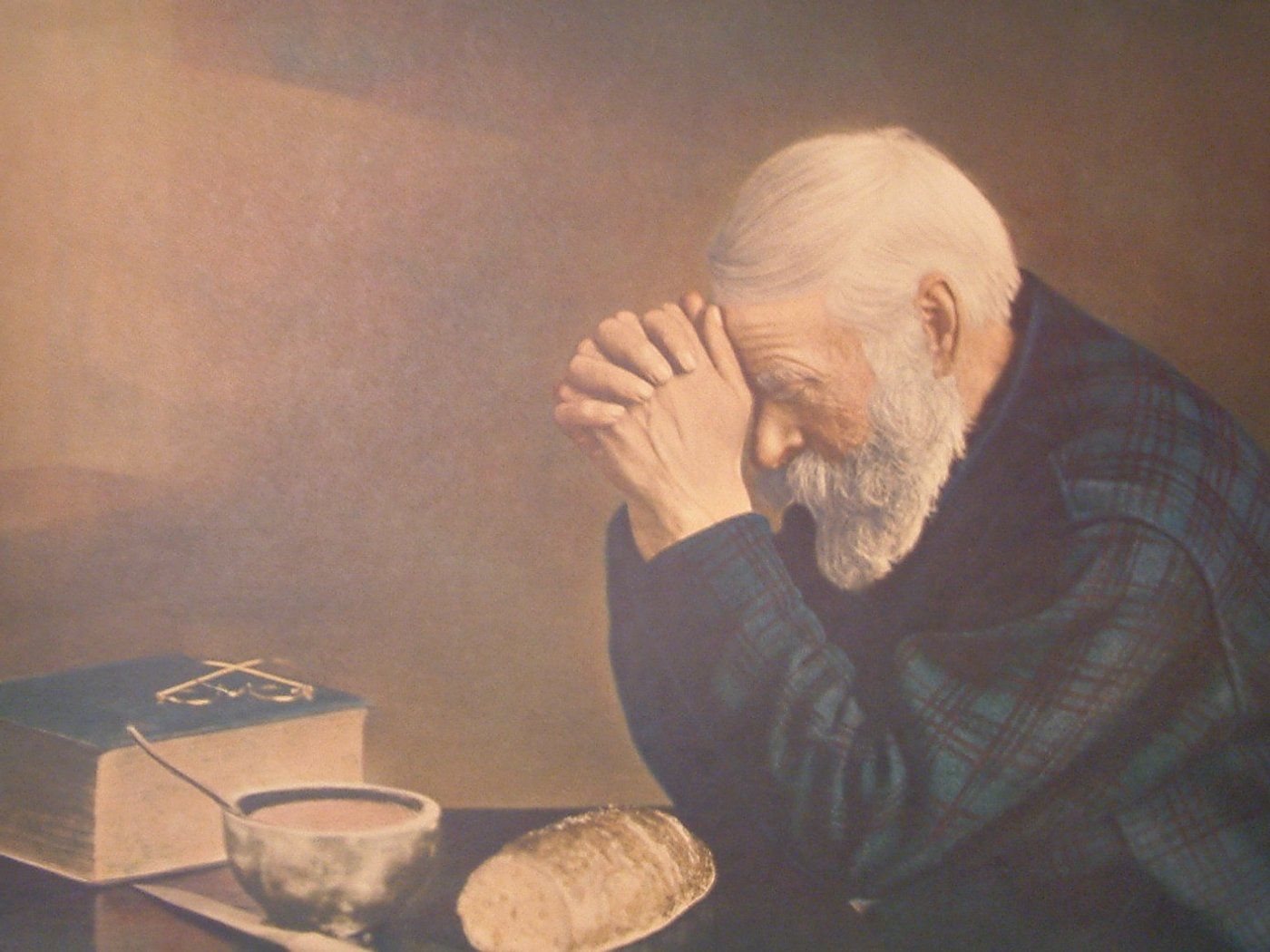
Those who are “in Christ”, that is, those who repent, believe and embrace Jesus Christ as their Lord and Savior have had promised to them a great and glorious inheritance. Though this anticipated inheritance contains many countless benefits and blessings, the greatest of them all is the eternal communion and fellowship we will enjoy with the Lord Jesus Christ Himself.

But let us not forget the very nature of an inheritance; it is only received after someone dies. First, Christ died for us (the Surety of our inheritance), and then, as we live and die in Him, we obtain that true treasure. It is an inheritance. It is not something we fully realize here and now. The blessedness of the Christian’s reward may never be completely realized this side of glory. Yet as an inheritance, promised by a loving God, it is waiting for the Faithful who die in Christ in this world, only to be raised with Him in the next.

~ apl