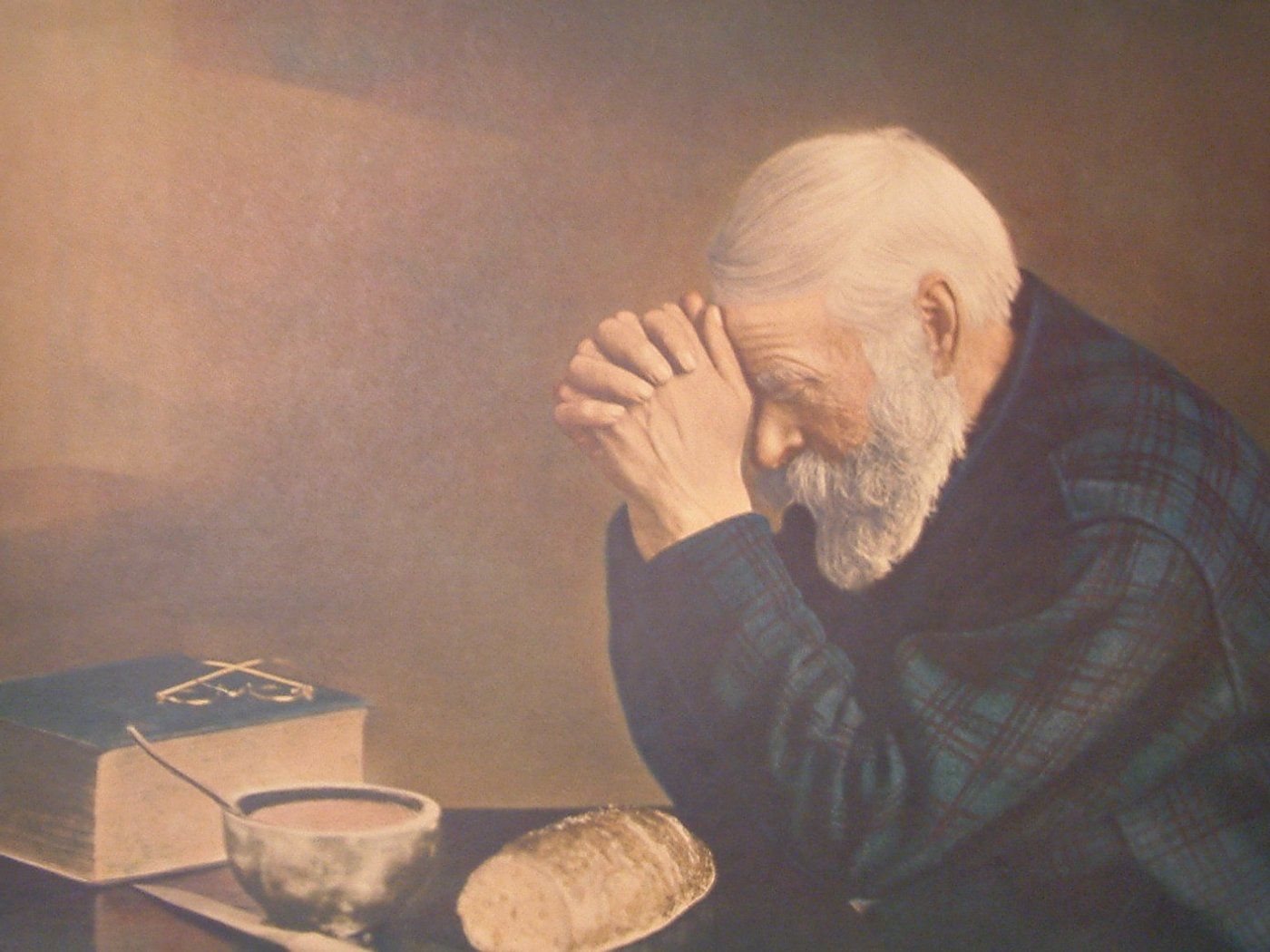
It is at the cross where God’s Law and God’s grace are both most brilliantly displayed, where His justice and His mercy are both glorified. But it is also at the cross where we are most humbled. It is at the cross where we admit to God and to ourselves that there is absolutely nothing we can do to earn or merit our salvation.
~ Jerry Bridges (1929-2016)
Tag: Quotes
Prayer Defined
Prayer is a sincere, sensible, affectionate pouring out of the heart or soul to God, through Christ, in the strength and assistance of the Holy Spirit, for such things as God has promised, or according to the Word of God, for the good of the church, with submission in faith to the will of God.
~ John Bunyan (1628-1688)
What Delights Him
This is true religion, to approve what God approves, to hate what He hates, and to delight in what delights Him.
~ Charles Hodge (1797-1878)
A Lively Resemblance
A man fast asleep in a house on fire, and while the consuming flames are round about him, having his fancy sporting itself in some pleasant dream, is a very lively resemblance of the unregenerate soul.
~ John Flavel (1627-1691)
In Simplicity & Honesty
Let us try in all simplicity and honesty to go out to our homes to translate the language of high faith and heavenly enthusiasm into the plain prose of daily conduct, so that all men can understand it.
~ Andrew Murray (1828-1917)
Respond To Principles
I may no longer depend on pleasant impulses to bring me before the Lord. I must rather respond to principles I know to be right, whether I feel them to be enjoyable or not.
~ Jim Elliot (1927-1956)
Safe Beneath The Cross
Come with me, poor soul, and you and I will stand together while the tempest gathers, for we are not afraid. How sharp that lightning flash! But yet we tremble not. How terrible that peal of thunder! And yet we are not alarmed, and why? Is there anything in us why we should escape? No, but we are standing beneath the cross – that precious cross, which like some noble lightning-conductor in the storm, takes itself all the death from the lightning, and all the fury from the tempest. We are safe. Loud mayest thou roar, O thundering law, and terribly mayest thou flash, O avenging justice! We can look up with calm delight to all the tumult of the elements, for we are safe beneath the cross.
~ Charles Spurgeon (1834-1892)
The New Life Which Follows Repentance
Our Lord’s idea of repentance is as profound and comprehensive as His conception of righteousness. Of the three words that are used in the Greek Gospels to describe the process, one emphasizes the emotional element of regret, sorrow over the past evil course of life, metamelomai; a second expresses reversal of the entire mental attitude, metanoeo; the third denotes a change in the direction of life, one goal being substituted for another, epistrephomai; Repentance is not limited to any single faculty of the mind: it engages the entire man, intellect, will and affections… Again, in the new life which follows repentance the absolute supremacy of God is the controlling principle.
~ Geerhardus Vos (1862-1949)
What Is A Christian?
A Christian is one who recognizes Jesus as the Christ, the Son of the living God, as God manifested in the flesh, loving us and dying for our redemption; and who is so affected by a sense of the love of this incarnate God as to be constrained to make the will of Christ the rule of his obedience, and the glory of Christ the great end for which He lives.
~ Charles Hodge (1797-1878)
Humility & Love
Humility and love are precisely the graces which the men of the world can understand, if they do not comprehend doctrines. They are the graces about which there is no mystery, and they are within reach of all classes… [The poorest] Christian can every day find occasion for practicing love and humility.
~ J.C. Ryle (1816-1900)
 A Prayer Life