The Prayers of St. Paul – Pt. 3

Continue earnestly in prayer…

~ Colossians 4:2a (NKJV)

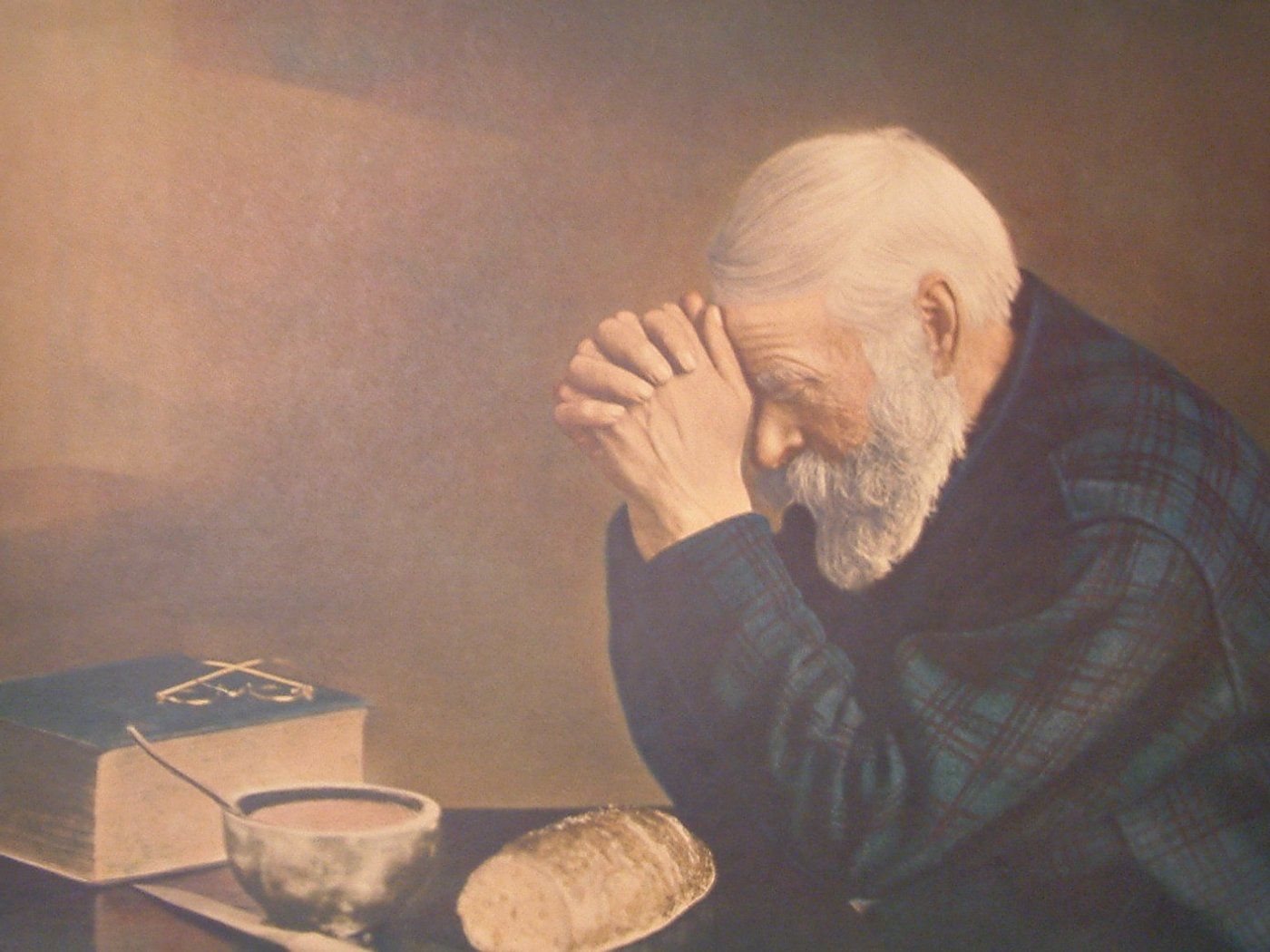
Maybe the most important lesson we receive from the Apostle Paul regarding prayer is the importance of a persistent prayer life. Many of the difficulties and trials that surround cultivating a wholesome life of prayer are quickly dissolved if we will but come to the Lord in an earnest, faithful and consistent manner. If practice ever made perfect, continuing earnestly in prayer, seeking the face of God continually, may best fit that old adage.

One of the trademarks of early Christians was their tenacious prayer life. We read, for example, in Acts 1:41 about the first disciples, how they “all with one mind were continually devoting themselves to prayer“. Likewise, in Acts 2:42, the Church is described “And they continued steadfastly in the apostles’ doctrine and fellowship, in the breaking of bread, and in prayers“. And then later Paul would exhort the Thessalonians, “pray without ceasing“. These are but a few inspired examples of the significance placed on an on-going life filled with regular prayers.

The words the Apostle uses in Colossians 4:2 that we translate “continue earnestly” literally mean “to be devoted or constant…to give unremitting care to a thing…to persevere and not to faint“. So we can see the importance, not only of occasional prayers, but of a resolute, determined and unrelenting life never ceasing with prayer. I feel it is safe to say most believers do not have this kind of vibrant prayer life. Most of us struggle to even know what to pray for, more or less how to strive continually in prayer. My sincere hope is this brief devotion on the Apostle’s attitude towards prayer will help us to grow closer to God and continue earnestly in prayer.

~ apl

Prayer That Moves

The effective, fervent prayer of a righteous man avails much.

~ James 5:16b (NKJV)

It has been said that “prayer moves the arm that moves the world”. And if there is anything that can prevail with God, it is the prayers of His people. Their humble, fervent, earnest petitioning. We have no power to control the Lord; nor can the creature dictate to the Creator. But we may ask Him for what we desire, and He has graciously said that such asking may effect much for our own good and the good of others. Prayer has no inherent intrinsic power. It is no magical incantation. It is an appeal, a petition, to an Almighty God who is pleased to lovingly work His will in and by the effective fervent prayers of a people who place their sincere faith in Him.

~apl

Simple Words

[C]ome, take up the cross, and follow Me

Mark 10:21 (NKJV)

Jesus gives those who would belong to Him three short imperatives here: come, take and follow. First, we come to Christ with nothing in order to receive everything. Second, He offers us the cross, the emblem of a true Christian. And in taking up the cross, we take up all it represents: both it’s difficulty and delight, burden and blessing, trial and triumph. But finally, in doing so, we show ourselves to be true followers of His. What do these words mean to you? Come, take and follow. Three simple words that can change your life, both now and for eternity.

~ apl

Wisdom & Knowledge

Wisdom rests in the heart of one who has understanding…

~ Proverbs 14:33 (NAS)

Wisdom is understanding in action. Wisdom is applied knowledge. And while knowledge may reside in the head, wisdom rests in the heart. Bare knowledge left to itself creates pride. But when filtered through the wisdom of the heart, understanding and knowledge are wonderful things that can a blessing and used to serve the Lord. Therefore never leave knowledge to itself. Let us always allow the thoughts of our head to flow through the wisdom of our heart before applying it in our life. For whosoever does this, is the one who has true understanding.

~apl

Poetic Prayer

As in poetry, so in prayer, the whole subject matter should be furnished by the heart, and the understanding should be allowed only to shape and arrange the effusions of the heart in the manner best adapted to answer the end designed. From the fullness of a heart overflowing with holy affections, as from a copious fountain, we should pour forth a torrent of pious, humble and ardently affectionate feelings; while our understandings only shape the channel and teach the gushing streams of devotion where to flow, and when to stop.

~ Edward Payson (1783-1827)

The Path of Life

You will show me the path of life

~ Psalm 16:11a (NKJV)

In Robert Frost’s famous poem The Road Not Taken, he describes one path that eventually diverges into two deep in the woods. This individual spends the greater portion of the poem contemplating which road to take. Yet, unable to take them both, and having to decide, the traveler chooses the one that looks less worn, less used. And his conclusion upon taking “the one less traveled by” is that it made all the difference in his life.

When it comes to our spiritual path, our soul’s life journey, only the path God shows us is the path of life. Though other paths might entice us with the lure of worldly treasures and temptations, ultimately they lead to death. Jesus would put it this way, “I am the way, the truth, and the life. No one comes to the Father except through Me.” If He has not done so already, pray God would show you the path of life. For in His path alone, lays all true difference.

~ apl

The Ears of God

The eyes of the LORD are on the righteous, And His ears are open to their cry.

~ Psalm 34:15 (NKJV)

Note: Even though the Bible teaches God is Spirit, the Lord is sometimes described in Scripture using human features. He is said to have human characteristics. I think the best way to interpret the passages that speak of God in this manner is not literally, but figuratively. And the Lord uses this human (anthropomorphic) language to describe certain attributes, not so we know what He looks like, but so we can better relate to Him and understand more fully who He is in our relationship to Him.

Having touched on the Biblical significance of The Eyes of God, let us turn our attention to the importance behind the Scriptural language of the Lord’s ears. The ear is the organ of hearing. By the ear, we receive and interpret sounds of various kinds. And like the human ear which is limited to detecting only a certain range of sounds, it seems Scripture teaches God’s ears are more specifically tuned towards the cries of His people. God wants to hear from us. He has inclined His ear towards us that we might know the Lord not only sees us in our life condition, but desires to hear from us regarding it. Therefore, may we not neglect so great a grace. Whether it be songs praise and thanksgiving, or the prayers of deep anguish and pain, Christians serve a compassionate loving God whose ears are open to their cries.

~ apl

The Eyes of God

[God’s] eyes are upon the ways of a man, And He sees all his steps.

~ Job 34:21

Note: Even though the Bible teaches God is Spirit, the Lord is sometimes described in Scripture using human features. He is said to have human characteristics. I think the best way to interpret the passages that speak of God in this manner is not literally, but figuratively. And the Lord uses this human (anthropomorphic) language to describe certain attributes, not so we know what He looks like, but so we can better relate to Him and understand more fully who He is in our relationship to Him.

It has been said the eye is the window to the soul. There is something about looking someone in the eye. There is an honesty, purity, and clarity the eyes find hard to hide. When the Bible speaks of God’s eyes, or the eyes of the Lord, is speaks to His full awareness or knowledge of all things. God is omniscient. Nothing is unknown to Him. From beginning to end, the ways of man are plain in His sight. As Proverbs 15:3 reads, “The eyes of the Lord are in every place, watching the evil and the good.” For those who trust Him, God’s watchful eye is a wonderful blessing. We can know He sees our afflictions. God knows our condition, and will come to our aid. But for those who do not fear the Lord, His knowledge of their sin will ultimately be what condemns them. Therefore, fear the Lord, take comfort in Him, for His eyes are upon you.

~ apl

The Face of God

Seek the LORD and His strength; Seek His face evermore!

~ Psalm 105:4 (NKJV)

Note: Even though the Bible teaches God is Spirit, the Lord is sometimes described in Scripture using human features. He is said to have human characteristics. I think the best way to interpret the passages that speak of God in this manner is not literally, but figuratively. And the Lord uses this human (anthropomorphic) language to describe certain attributes, not so we know what He looks like, but so we can better relate to Him and understand more fully who He is in our relationship to Him.

In the passage before us here, God’s people are told to seek His face evermore. What, then, does it mean to “seek His face“? Think about it this way, what does it mean when someone turns their back on you? It means they are angry or indifferent towards you. It means they care not for you or your well-being. So when Scripture speaks of God’s face shining upon us, and not hiding His face from us, or that we are to seek His face, it simply means we should strive for the Lord’s gracious presence, favor and blessing in our life. It means to have our spirit gently warmed by sweet communion with Him where there is peace and rest for our soul. Seeking His face is seeking Him! And this, may we do, by prayer, by faith, and by Christ, now and forevermore!

~ apl